compiled by Qursana!
You are welcomed to post, distribute, and print this text as much as you want as long as it is for non-commercial use and with conditional free-distribution! Please pay attention not to alter people's statements.
According to the Lebanese and Israeli governments (though more applied in Lebanon), communication between Israeli and Lebanese citizens is prohibited and in some cases punished with a court-martial. For this, this is an illegal roundtable – part of it was a defying, challenging and painful conversation that did not go smooth without tears, rage, apologies, pain, guilt, affinity, discussion, smiles, and tight embraces. This conversation is not representative of the mass majority of both populations; it is rather an anarchist worm-eye view of the latest Israeli war on Lebanon. Taking part are anarchists who had direct contact with this war on both sides of the border, their meeting was facilitated by networks of global solidarity within autonomous spaces in Europe, and also through the growing global anti-capitalist anti-authoritarian movement. A movement that is witnessing crises, but also signs of life!
Anarchists who took part are Eyal and anat, holding Israeli passports; and Hazem and Imad holding Lebanese passports.Hazem “We have been at war with Israel for as long as I can remember. We lived in an era of fear where each time something goes wrong it’s either
the Mossad’s fault or an international Zionist conspiracy (though now it’s the turn of Syria). It is the same story with every totalitarian regime, the never-ending need for an enemy, an enemy that is different from us - with a different culture and different looks. This enemy was always and still is the strongest tool in the hand of such totalitarian regimes in order to install fear and paranoia to shift people’s attention away from the real problem and the meaningless of war. One of the best examples would be the US; at first there was the “commies” and now there is Al Qaeda and “terrorism”, and as a result, US citizens are willingly being stripped of their liberties for “security” while supporting state terrorism. The funniest thing about it is that we as Arabs endlessly criticize U.S. generalizations and ridiculous stereotyping; but when it comes to our “enemy”, we stereotype and let ourselves be blinded by fear and hate.
Do I believe that working with Israeli anarchists is wrong? Hell no! As an anarchist I believe in neither borders nor nations, but not only that; I believe that everyone should know that the road to peace and justice starts locally with people connecting with each other, and only if people knew their rights and practiced their responsibilities through direct democracy. Many Arab regimes have established contact with Israel, Lebanese traitors collaborated with Zionists, and even members of our government did that. So if our oppressors on both sides could arrange among themselves ways to divide power; I do not see a reason for us as militants who are not restricted by borders and nations not to join hands to destroy both of them. I rather see that as a responsibility.”
Imad “Back during the first
Israeli invasion of Lebanon in 1982 , Israel said it wanted to uproot the Palestinian resistance, and the result was severe damage to everything from humans to the environment to infrastructure to the economy. Today, I am 26 and I still do not know what to say about the war. You cannot explain war especially if you have lived it. It is these little moments of mixed feelings of rage, fear, burning urge to fight back, helplessness, nausea, nasal congestion from crying too hard, a driving anger to kick back and as hard as possible. It is all this. This is war for me. The hardest about being away this time was the moment I hang up the phone with my family knowing that in this moment my life goes back to normal and their life goes back to war. My cousin who lives in the southern suburb of Beirut told me on the phone "We know what is coming next; we have our suitcases packed and ready by the door. I am sleeping with my clothes on (she laughed here)! Do not be worried, we have done this before. It is just that sometimes its hard to remember what to do, I mean after such a long time (laughed again)!”
I will never forget the feeling of helplessness that took over me when she refuted my desire to go back by saying “what will you do to help us here? You will be another burden, another person in the car, another person to worry about! There we know you are safe! I told you we have our suitcases ready and just waiting… anytime we will have to move. Stop this nonsense.” This is war for me!
My mother refusing to leave her house in the south at 65 years old, though she was alone with no car nor electricity nor phone, because as she said “I’m too old to move around, there is no electricity anywhere, at least here in my house I know where everything is - even in the dark. I promise if things go really bad, I will leave, I promise. For now they will not drive me out.” This is war for me, this moment of empowerment that my mother felt in staying put despite the danger. It is a rage that this is happening to you again. My family left, and now they return to find property damage, but as they say in the village, thank god it is just the house, good that no one got hurt! This is war, this is the game with Israel, you always try to leave with the least damage and be grateful for it; this is what outrages me the most.”
Eyal “This was the second time that I was in a war in which I actually had some chance of getting hit - the first time was the first war on Iraq in 1991. I was 11 years old then and there was this big public scare. Everybody would wear masks and huddle in sealed rooms for fear of a chemical warhead attack – which fortunately did not occur. This time it was less scary because it was just usual ordnance, though it should have been scarier, since this time more rockets fell. Strangely enough, I sort of blocked that, and didn't feel very afraid. My brother would ask me whether I thought it would be better if he stayed in the hallway near the elevator in our apartment building, and I would tell him "yeah, you go there" so that he would leave me alone. However a lot of other people I know got pretty scared, and some even left town for a while. Unfortunately for them the war dragged on for almost a month and most had to come back without the rocket threat being over.
It was also the first 'actual' war Israel initiated that I experienced, since the conflict with the Palestinians isn't much of a war, it's more of a continuing colonial policing operation with some occasional military campaigns. It was very weird for me to see how the government can simply, like, 'push a few buttons' and people actually just go and fight for it, invade for it, and support it. That was kind of depressing.”
Why is this war being waged? And what did it mean for you?Imad “why!!! does it matter? Nothing from this equation will ever make sense! what matters is how! How can Israel after all that it is doing in Palestine, continue to go as far as it did in Lebanon and do it without even a slap on the hand?”
anat “Million reasons, the military always wants to wage wars and especially now that they were planning to make a cut in the defence budget, this was an opportunity to prove the need for a strong military rule over our lives.
Olmert and
Peretz come from civilian backgrounds, unlike the mass majority of the political strata in Israel, they did not have a military history. They were always criticised about it, and they wanted to prove they are strong. Basically, having taken part in wars is an important key to political jobs in Israel. I also think they were trying to get Syria involved and have an excuse for a US attack on it. They also thought they can terminate Hezbullah and
Hassan Nasrallah , as if terminating Hezbullah will kill the chance for another party rise against Israel. To be honest, it is hard for me to see why they did it. It is so ridiculous that it is hard to imagine that anyone could even think of doing that. I feel that this war is about who has the biggest dick. I am being shot at and people are killing in my name and with my money all for this patriarchal honour shit. This war made me sick, and as a woman even sicker.”
Eyal “Actually, I can't say for sure. On one hand, you could say this war got Israel some limited political achievements. Such as an obligation, at least on the official level, of the Lebanese army to go into the south of Lebanon and make it appear as though it was the only armed force there... but otherwise, the war was quite a disaster: Hezbullah was quite effective in many of its forms of attack - in hitting infantry, tanks, and even in some cases special forces and a helicopter. It was shown that Israel could make Hezbullah stop firing rockets - the Israeli leadership made a lot of ridiculous claims when the war started, such as "Hasan Nasrallah will never forget the name Amir Peretz" and I think Olmert said something about wiping Hezbullah off the face of the earth, although maybe it was not as absolute sounding as that. And now there's quite a fallout in Israel on the political level. There's a lot of recrimination amongst the higher-ups, many people are calling for the resignation of Olmert, Peretz and Halutz. Many people see them and this government as a failure.
An important question here is why the U.S. did not restrain Israel - it didn't prevent it from starting the war, nor did it make any effort to curb Israeli military actions or to bring the war to a speedy conclusion - they basically cheered Israel on. Should all this be seen, then, as some preliminary proxy war between the U.S. and Iran? I can't say. I have more questions than answers on this matter.”
What about Hezbullah , how do you see them? Eyal “Well, for a fundamentalist Islamist, pro-Statist and not anti-Capitalist organization, you could say Hezbullah is kind of neat.
No, seriously, I definitely agree with the policy of actively resisting the Israeli military presence in Lebanon, including the use of guerrilla warfare. The fact that a lot of the military and probably also financial and logistic support is coming from the Iranian regime doesn’t sit all that well with me; but had I been a deeply religious Shiite I wouldn't have had any trouble taking Iranian aid. I object to most of Hezbullah’s policies - reinforcement of traditional social relations and especially the family, support for the continued existence of the state of Lebanon (albeit not necessarily in its current form) and states in general, but to be honest I don't really know that much about Hezbullah’s position on internal social issues, so maybe they're better (or worse) than I think.”
anat “I support Hezbullah in the way I support the people who are oppressed, but if the current division of power changes I am not going to be able to support them because they are a hierarchical patriarchal power who want to maintain the oppressed and oppressor dichotomy. They want to be the oppressors; because of this I am against them as much as I am against Israel being run with the same dichotomy. But they are very different from Israel, because here it is clear who are the oppressed, and I am always with the oppressed. Israel is different, Israel is not worse than any other capitalist state, the difference is that it is my problem. As someone from an Ashkenazi Israeli background, it is my fucking responsibility”
Imad “Despite my strong ideological and structural disagreements with Hezbullah; it is impossible to condemn the capturing (not kidnapping as mainstream media reports) of the two or put any blame on them concerning the Israeli-waged war. Hezbullah is a religious fundamentalist patriarchal party that I am against like any other. We might meet on using armed struggle against the Israeli war machine, but still we have serious disagreements on numerous levels that¨were manifested during my activism in Lebanon in various political confrontations with them. Even at a personal level, as a person who comes from a Muslim Shiite family, we have had our rounds of conflicts. I can criticize Hezbullah endlessly, and also some of the strategies they used during this war, but I cannot condemn the capturing of the two soldiers, nor their armed struggle against the Israeli military force as much as I will not support any calls for their unconditional disarmament. The capturing was declared as a maneuver to exchange the Lebanese prisoners still held in Israeli prisons since as far back as 1975. What was Israel’s “reaction”? More than 1000 civilian casualties, more than 4000 injured, around a million displaced, estimates of
15000 tons of heavy fuel oil spilled in the Mediterranean , and damage to the infrastructure exceeding 2.8 billion euros… and the meter is still rolling. The amount of damage is unbelievable and the reaction is ridiculously outrageous. And on top of that, because of this war, Hezbullah, unfortunately, were given more public sympathy than they ever had - and funnily enough, it was well deserved to a certain extent. ”
Can you give us some first-hand overview of the anti-war movement that took place in your respective countries? And what can you say about the responses to the war?Eyal “What anti-war movement!? It was just the non-Zionist left like it usually is – along with the Palestinian parties, the various progressive NGOs, the miniature Marxist groups, and assorted anarchists, pacifists, LGTBQ activists… etc. (some of the above categories overlap of course). Maybe after the 3rd week some people started to become disillusioned with the war, but there wasn't really any spontaneous mass anti-war activity.”
anat “I want to start with the hardships; the major hardship in these actions was that the amount of hate skyrocketed in the face of not-so radical slogans. We were a very small and mixed group of people, though we were trying to make a committee as wide as possible and have as wide support as possible against the war. We were trying to find the minimal consensus and find the minimum base lines that we could all agree on; so we decided to use an “anti-war” message, Stop the Bombing, Stop the War, Release All Prisoners, Cease fire now with no preliminary demands; very bland message not the most radical thing to say like anti-Zionism. It was a very simple message to stop the war and that Israel is responsible. For example this basic message was a legitimate political opinion at the end of the previous war on Lebanon not a majority opinion but part of a legitimate mainstream political discourse. Suddenly it became the most treacherous thing to say, the most offensive thing you can say to an Israeli. The majority of the people who stopped to react to our actions where wishing we would die. People were coming ready with eggs to throw at us. One of the demonstrators who parked her car near the demo was followed home by some right wing people who beat her mother with sticks when she opened the door. Some received phone calls threatening to throw a grenade at the demonstration reminding us of a
previous incident in 1983 where they actually killed an anti-war demonstrator in that way. This was the amount of hate shown against a mere anti-war statement; they saw it as a real threat. The mainstream was narrowed, the people understood the Stop the War slogan as kill all Jews. The reactions were ridiculous. For them everything in this war, that they think Israel got caught in, was justified. If there is a doubt that some civilian area is linked to Hezbullah, this is enough to bomb it. Everyone acted with the mentality of Nikolai Yezhov, head of the NKVD (Soviet secret police) during Stalinism, who said in response to the news about the terrors of the Stalin regime that “better that ten innocent people should suffer than one spy get away, when you chop wood, chips fly.” For Israel, everything was and still is, when you chop wood, chips fly.
The police were real bastards but it also depends on where the action was. In Tel Aviv for example they were beating people. But in Haifa, where it has always been the case that the police there are less violent than those in Tel Aviv, they did not beat us, but rather they encouraged the right wing demonstrators to beat us. In Haifa they were excessive in detaining people and trying to put them under house arrest just for holding an anti-war vigil. Later they started to protect us more and not let the right wing attack us much; on the other hand they escalated the violence in Tel Aviv where for example during the
demo at Dan Halutz’s (Israel´s chief of staff) house they were beating the demonstrators and violently chasing them. There were several fainting cases and people who needed to go to a hospital.
The Israeli media had it all the same, this was a justified war and Israel was caught up in it. They wanted it to appear as a war against Israel and that Israel was forced to react. That was the common discourse, no discussion on whether the war was right or wrong just technicalities: such as if they go into Lebanon as far as Litany or where they were later, or if they let infantry troops in or not. It was o.k. to be critical about how the frontline fighting was handled but not talking about an end to this madness. When we did get some coverage it was very little, for example we had a demonstration almost everyday, and the media would tell us that they cannot cover today’s demo because they covered yesterday’s demo. We got more interviews from foreign media, and even Arabic media which was something we really wanted. We were mentioned several times on LBCI (Lebanese satellite TV channel). I even heard that Hezbullah’s Radio, El Nour, mentioned that they condemn the brutal treatment of the demonstrators in Tel Aviv.
In Haifa, on what the Haifa people call the first day of war, when a Katyusha hit the train station and killed 8 people, on the 16th of July four days after the war started for the Lebanese, a group of women who decided to start a women anti-war group went to the train station to protest and send a message through the mainstream media that was present. They were told by channel ten that they cannot report this action because there is no such thing as an anti-war movement. They had the nerve to deny us even when we were there. In Tel Aviv there were
4000-5000 people in one demo , and in Haifa maybe 300, not to mention other places, but still they acted as if we did not exist.
What was inspiring was that the weekly demos at the Apartheid Wall continued, organised by Palestinians along side with the
ISM ,
Anarchists Against the Wall and others; and so did the repression even though Israel managed to shift the world’s attention from what was happening in Gaza and the West Bank to Lebanon. Just recently, on the 11th of August, they
shot an Israeli lawyer and activist Lymor Goldstein in
Bil’in with rubber-coated bullets at close range, sending him into coma. We cannot forget what is happening in Gaza and also that the wall is continuing its path! During the recent war on Lebanon they killed around 23 people in Gaza in one day but no one was talking about it. The people of Gaza are being starved and denied urgent medical care. It is completely crazy - Gaza is a huge concentration camp where they are slowly killing people.”
Hazem “I remember having a great laugh listening to my dad asking himself where are the Arabs while we are being bombed? Wondering where is the whole world and how can they accept this? Well they accept this and do not react the same way we did not react to the war on Iraq or the way we don’t give a flying fuck about people starving to death in Africa. Most of the Lebanese anti-war movement was based on nationalist and/or economical/political interests. As for the small amount of leftist activists or pseudo-parties they were too weak to make a real statement or take a proactive position without taking into consideration the reaction of the blinded population.
The Lebanese anti-war movement’s work focused on the relief efforts that in majority did not differ from the mainstream political mentality. The mainstream political parties did their usual routine by sending their members to show face in refugees’ centres bargaining on more public support for their party. These same parties that forced their presence and flags on independent relief centres started their work a week after the war started. They began spending big amounts of money on their publicity while asking people to donate before they even started doing work on the ground. For example the World Food program donated 10 tons of food to one of the relief centres who had paid employees delivering the food with more than 20 camerapersons filming the food distribution on refugees.
Many mainstream organisations said they cannot reach south of Lebanon and thus cannot deliver aid. We proved this wrong with our actions. 7 activists from RASH managed to get to the south and deliver food on their feet. The parties did not want to risk their lives. At first everyone took us as a joke especially when we refused to take donations unless it came from individuals or radical organisations and still managed to deliver around a ton of food to people in the south who were under siege. I have to note all respect to the
Samidoun(stemming from the
Sanayeh relief centre) that managed to create a grassroots coalition for people whose intention is to help out.”
On the Lebanese side, there was a communiqué issued recently by the so-called “Libertarian Communist Alternative” from Lebanon that was circulated on certain anarchist/anti-authoritarian websites/lists and created a stir, what do you think about that? Hazem “I find it shameful. It describes the current government that recently took power as pre-revolutionary, which is crap. This government is based on the common interest of - strangely enough - extremely different parties on the ideological level; parties that feed on anti-Syrian racism. I’m not discussing the retrieval of the Syrian troops, but about the forms of violence that faced Syrian civilians in Lebanon who anyway were already being exploited and discriminated against. The Libertarian Communist Alternative never showed up to any actions, we never saw them anyway on the field, and they refused to meet with us. I can write pages criticising them, but I will not waste my time, they are insignificant, it is not the brand of your organisation that makes you an anarchist.”
Imad “Have to say I never heard of them as a group, for example the name of the group was new to me. I heard about one guy in Beirut who is part of this so-called group but I do not know if it is for sure, nor who the rest are… that is if there is a rest. As for the communiqué, it does not represent me nor the politics I define as libertarian or anarchist. On the local front, it sees hope in the 14th of March alliance which is a capitalist alliance between the ruling class in Lebanon which is corrupt, capitalist, and feeding on people’s misery and actively contributing to it. Many from this alliance can be easily linked to parties and political currents responsible for crimes against humanity, not just during the Lebanese civil war, but also against the Palestinian population in Lebanon. Such an alliance, so-called “movement”, can never be something to look forward to nor see any hope in but rather fight against. This communiqué reminds me of the Iraqi opposition outside of Iraq that was supporting that US war, those were the same ones that opposed the Ba’ath regime from their air-conditioned homes in Europe and North America, and now installed their ruling class in Iraq collaborating with every state and multinational to plunder and terrorise the Iraqi people just like Saddam did.”
Though that this war is clearly not over, it seems that the whole world shifted attention away from what just happened, and is now focused on the positioning of the UN “international peace force” in the south of Lebanon as the saviours of the day, how do you see that? anat “It all seems ridiculous to me, what are they going to do? It is some kind of a media thing, Bush and all these leaders want to show that they are doing something, but obviously the agenda is for war not for peace. Obviously what we are dealing with here is the foreplay for the next U.S. war in the Middle East. The U.N. forces will not stop anything, they were there when Israel was occupying Lebanon for 18 years and their headquarters have been bombed by Israel several times.”
Imad “Ridiculous, the least to say! What for? Even if they are meant to do something, why in the south of Lebanon? Israel is the aggressor, why not position themselves in the north of Israel/Palestine. To protect who and from who? Israel bombed a UN base in 1996 in
Qana , Lebanon , massacring over a 100 refugees, that took refuge in that base believing that the highly visible UN post would be spared the Israeli attacks; and what happened, an apology and some political charade. They did it again in this recent attack killing four UN personnel by bombing a UN base in the south of Lebanon. The "international peace troops" are like the UN, a hypocritical lie and another way to waste money and efforts. The UN is a hierarchal body, used to domesticate the world and one that supports state-terrorism and the plundering of impoverished people. It´s worthless and needs to be held accountable. I would not expect any good from them nor their troops.”
Eyal “They are foreign Imperialistic invaders who should leave immediately; I will not have any reason to complain if somebody puts bullets through their heads. Really, if those asshole European states had any concern for the lives and the safety of people in this region they could have sent some anti-aircraft batteries and stationed them in Lebanon to prevent any attack on Lebanese villages and towns.”
Hazem “After all, what is the United Nations other than a tool in the hands of the powerful to make the weakened weaker. I refuse any sort of cooperation with this structure. It’s like stopping to smoke on your death bed.”
The questions stopped here, but they did not end. This was the beginning - the beginning has been happening for a while now and this is the first written discussion between us. It is reflections, rage and solidarity; it is nothing but the beginning for a deeper discussion, wider reflections and louder rage. Many is still left to be answered and discussed. The war had just begun… again!


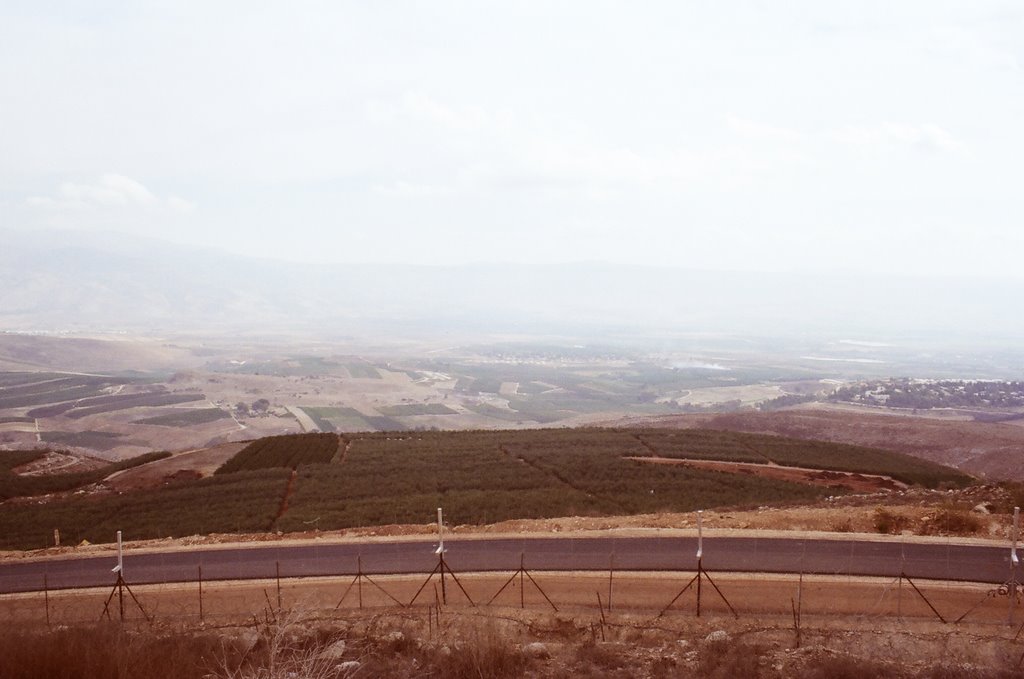 I arrived to meet Ahmad after a high emotionally-charged trip through the destroyed villages along the Israel-Lebanese border. We stood there silently sobbing watching the forbidden land that we consider Palestine as we puffed our cigarettes along with our frustration and helplessness. On one side of the border total destruction, burnt land and graffiti of resistance; and on the other side, green fields and tidily arranged houses protected by Israeli military. All look serene rendering the scene more brutal and surreal. Borders never looked more ridiculous and painful, a winding barbed wire with fences and military roads marking the separation, cutting through a land that looks very much alike. A land that is one, a natural continuation divided by a war machine and ruthless bombing. We had to leave quickly; the feeling of helplessness and frustration in the face of such a ridiculous fence and such grave injustice was too intense to bear.
 We stayed in our house, with our grandparents and our uncles and their families. We played all day as our parents watched the news or listened to the radio. At night there was a lot of noise from the bombs. The noise felt much louder at night and scared us a lot, during the day we could ignore it and play, but at night it was impossible. We also had to turn the lights off so the planes won´t know that there are people inside. I kept telling myself that if things become very dangerous my family will save me, this is how I went to sleep. We heard that some families had no food left, but we had grains and we were taking vegetables from our garden to eat. Sometimes there were people from the Civil Defense delivering bread, and when they did not come due to the bombing my mother would bake some. What scared me the most were the empty streets. It was very scary to look out anytime and not see anyone nor heard any movement. We felt all alone though there were many people in the village. This was the scariest part. My little sister was crying all the time, and we could not do anything to make her stop. Even letting her play with my toys did not work.”
 Ahmad´s friends were getting restless around us, giggling and teasing him by chanting “Ahmad, the martyr”. He looked to the ground and smiled shyly - I left him at that point. There was nothing more I wanted to know, or could bear to ask. It was becoming harder for me to fake strength in front of his, holding back my tears was choking me in front of his words of defiance and the calmness of his voice. I did not live this past war, and did not feel entitled to break down in front of him while he held together so beautifully. I thanked him, and he ran to join his friends in throwing pebbles at me before they ran to hide behind the water tanks shouting to me to come to the shelter... I walked away towards the car. In Ahmad´s village there is not a single bomb shelter, a village contaminated with cluster bombs, few kilometers away from the Israeli – Lebanese border, few kilometers away from a green land packed with beautiful houses with red-brick roofs and lots of bomb shelters – those are Israeli settlements.
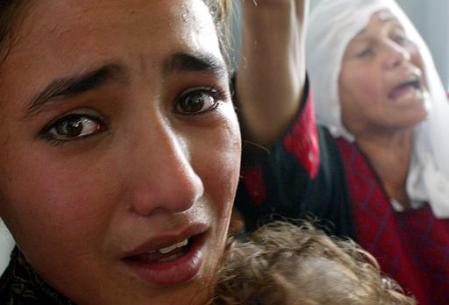 The Israeli military is engaging in an continuous offensive in Gaza, which resulted so far in more than 300 injured, and more than 70 killed - mostly civilians. Please take action urgently to stop this madness named by the Israeli military “Operation Autumn Clouds”.
 "It is the saddest scene and images I have ever seen," 29-year-old Majed Kafarnah said. "I saw people coming out of a house covered in blood. I started screaming to wake up the neighbors." Mona Al-Zanoiun, 41, said, "They destroyed the houses above our houses, killed women and children; they are criminals, they murder us in cold blood. Where is the international community and Security Council to see these massacres? We do not want them to send us food; we want them to take brave actions to stop these crimes." She described what happened to the town as akin to a tsunami and destructive earthquake.
 Mahmoud Nasser, 33, said, "We rush from one mourning tent to the other because of the operation that only ended yesterday and already we have to deal with a new massacre. Difficult images, dead children, injured children with their faces torn. It's unbelievable." There was an ugly scene in the town's hospital as well, where mothers cried out as they carried their injured children. He added that all of Beit Hanoun "is busy with only one thing, moving the dead and wounded. All this between puddles of blood, lots of blood and body parts, next to some of the bodies were the schoolbags and sandwiches of children preparing to go to school."
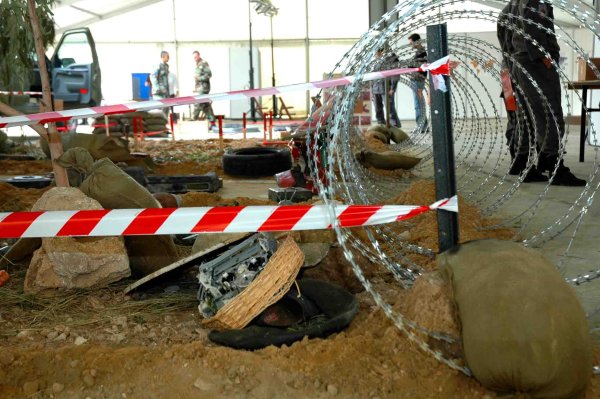 When it comes to cluster bombs, rain was again an issue; a big tent was put up in Martyr´s square in downtown Beirut to host the event to avoid the pouring sky. Many NGOs, local and international, gathered to raise awareness about this indiscriminate weapon and to voice a demand for a ban on its manufacturing, distribution and usage. School children and adults toured the multiple sections of the event, an extensive photo exhibit revealing the perilous impact of these weapons in Southern Lebanon; a booth and area where specialists illustrated the stages in constructing prosthetics and artificial limbs, and where the public could also try them along with wheel chairs; a puppet show for children raising awareness amongst the children; a musical concert by handicapped children; a re-production of a contaminated zone and a display of the different types of cluster munitions coupled with demining demonstrations; an exhibit of products and crafts made by Lebanese victims of landmines. The event included signing a petition (sign online) against the production, trade, stockpiling, and use of cluster munitions.
 Ms. Gavand said that cluster munitions continue to be a problem in countries like Afghanistan, Iraq, and Kosovo – to name a few, and even in Laos more than 30 years after their usage by US forces. Usually cluster munitions have a failure rate between 5 and 30 % but in Lebanon it was as high as 40. Ms. Gavand linked this among other reasons to Lebanese soil since the softer the soil is the less the chances are for these bombs to explode immediately. She also spoke of the way they were used by Israel by being launched too low adding “we do not know if this was intentional or not, but it must have contributed to the high failure rate.” She also spoke of Israel using outdated bombs going as back as the seventies, something supported by multiple reports from international investigations of the contaminated areas, and visible in the photos of the cluster-bomb shells in the exhibition in Beirut. She expressed deep concern over the rain season; “marked contaminated areas will be wiped out by the rain affecting all the mapping done, and cluster munitions will be moved from place, let alone be covered by mud and hidden away. All this will make cleaning the areas much harder adding to a lengthy, costly and slow process – all of which will have serious impacts on civilians in the area. The rain most probably will affect the agreed upon due-date for finishing the cleaning which is set for the end of 2007.”
 Victims of cluster munitions in Lebanon, according to Ms. Gavand, do not only suffer serious injuries such as amputations, but also suffer shrapnels all over their bodies – a nightmare made clear in the photos displayed through out the event courtesy of the Norwegian People´s Aid. Photos that showed boxes piled with cluster bombs, contaminated fields with sheep and shepherds walking around, amputated victims, children with shrapnels going as deep as their lungs, cluster bombs in house vicinities, and even a bloodied stretcher used to transport an injured civilian. The images are so strong that no words can describe them, yet this is only a still reproduction of a much more horrid reality.
 The event in Beirut is hoped to be a launch for many to come in various Lebanese areas in an attempt to raise awareness around the issue of cluster munitions in a hope to undermine to a certain extent the associated risks. But will it be enough to save the lives and the welfare of the people is the big question. It definitely will with the visible bomblets, but there lies the danger of the hidden ones, those tucked under stones or covered with mud. Ms. Gavand said that though she saw quite a lot of pictures of clusters before heading to the south on a field trip, it still took her few minutes to visually locate one tucked away in dry branches though it was pointed out to her by one of the demining experts. Those few minutes that are more than enough to cost a person her or his life are another call for a total ban on this weapon. Awareness is indispensable and life-saving but is not enough - as much as demining and cleaning the contaminated areas are vital and a matter of life or death – yet it is still possible for some bomblets to escape expert hands especially with factors such as rain and the wide spread of the bomblets. This is what renders a ban on cluster bombs the most efficient way in terminating the danger of such indiscriminate weapons. Everyone I talked to at the event today had one message to the world, “ban it!”. More voices are needed and definitely more action against this outrageous crime. The toll is very high; it has been for a while and the horrid reality is that it will be on the rise for a long time.


 “Popcorn” is the US-military slang name for cluster bombs. A successful yet brutal parody. A basic design of cluster bombs is a hollow shell hosting hundreds of “small bomblets” varying according to model and design. These little bomblets are scattered over with a possible affected area getting as wide as three football fields. Cluster bombs are known to have a high rate of leaving unexploded bombs behind - still they are in use. Absurdly enough some manufacturers of these bombs decided to give them bright colors in an alleged attempt to undermine their risk by making the leftovers more visible to civilians. Not-surprisingly, it turned out that the new introduced bright colors are only worsening the situation because they are attracting children. A nightmare well-known to Afghani and Vietnamese children to name a few, let alone to the governments of the world. Still cluster bombs are among the “legitimate” weapons.


